The Northwestern Mountains · The Midlands Tea Belt · The Central Highlands
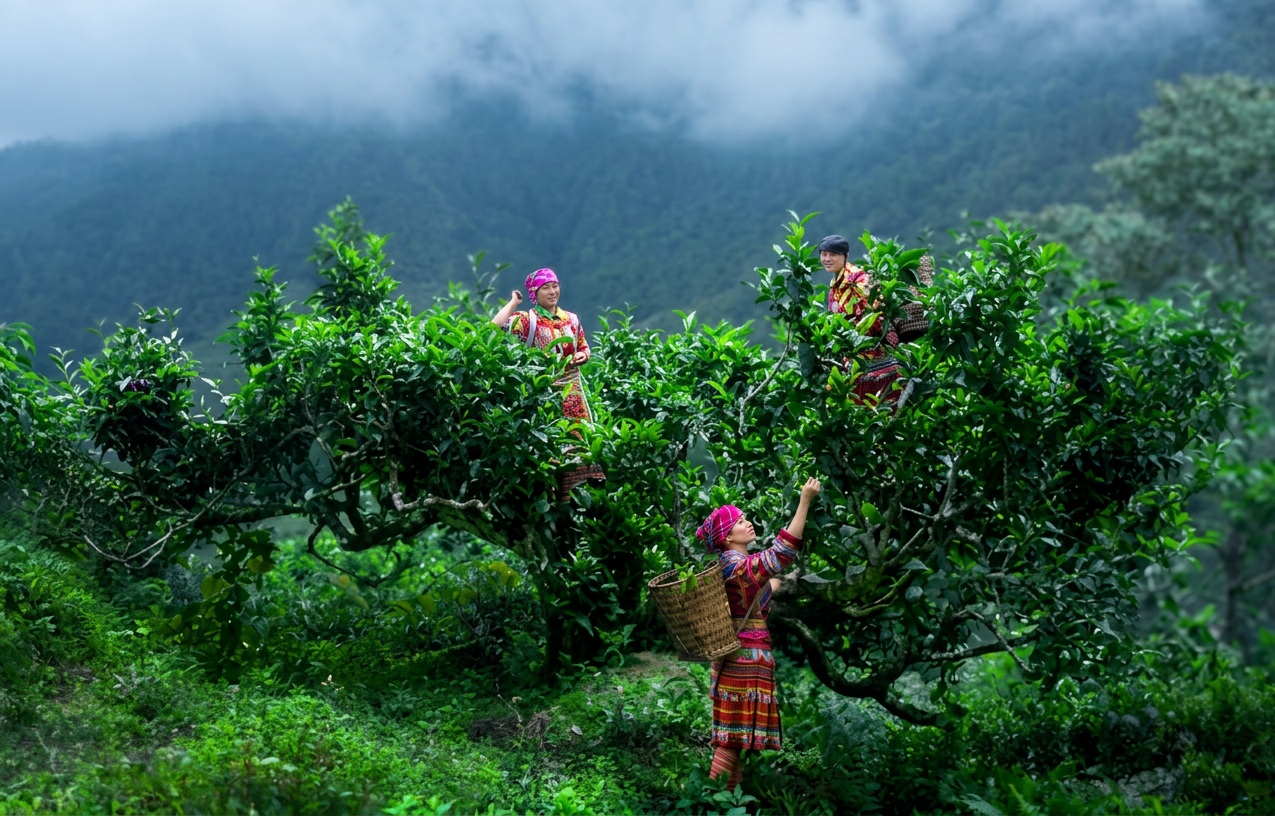
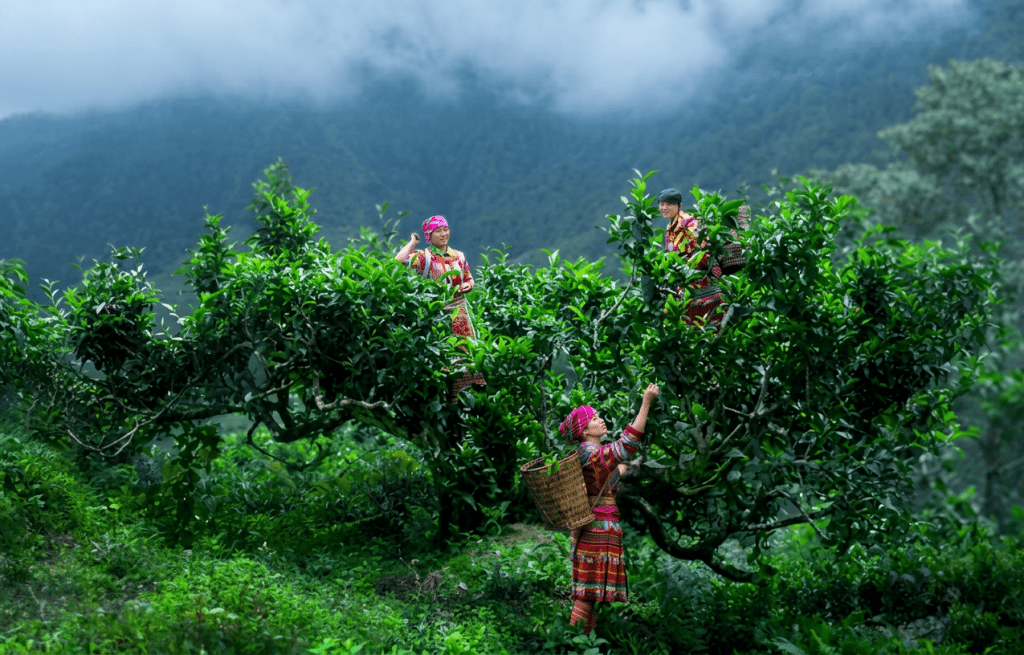
Vietnam has been growing and processing tea for centuries. It is one of the few countries in the world where ancient wild tea trees still grow across vast stretches of highland forest — not planted, not farmed in the conventional sense, but present in the landscape as they have been for generations. The country’s geography, running from the subtropical north through dramatic mountain ranges to the volcanic plateaus of the south, creates an exceptional range of conditions for tea cultivation. Altitude, rainfall, soil type, and temperature vary considerably from one region to the next — and so does the tea.
What is less well known outside Vietnam is the depth and variety of what is being produced here. The country’s export industry has historically been built around volume — commodity black and green teas traded on price. But underneath that, a rich specialty tradition has been quietly alive for a very long time, and the wider tea world is only beginning to pay attention.
This guide covers Vietnam’s three principal tea-growing zones: the Northwestern mountain provinces, where wild ancient shan tuyet trees define both the landscape and the culture; Thái Nguyên, Vietnam’s most storied everyday tea region; and the Central Highlands, where a cooler plateau climate and volcanic soils produce some of the country’s finest oolongs.
Part One: The Northern Mountains
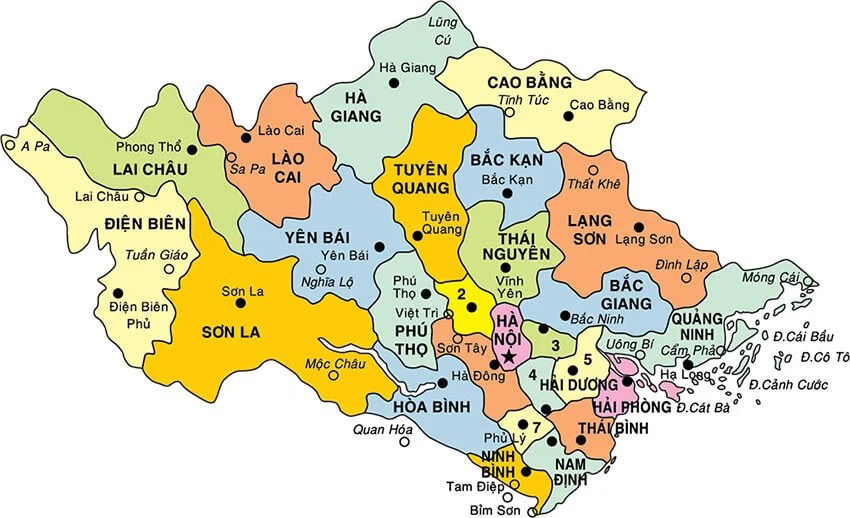
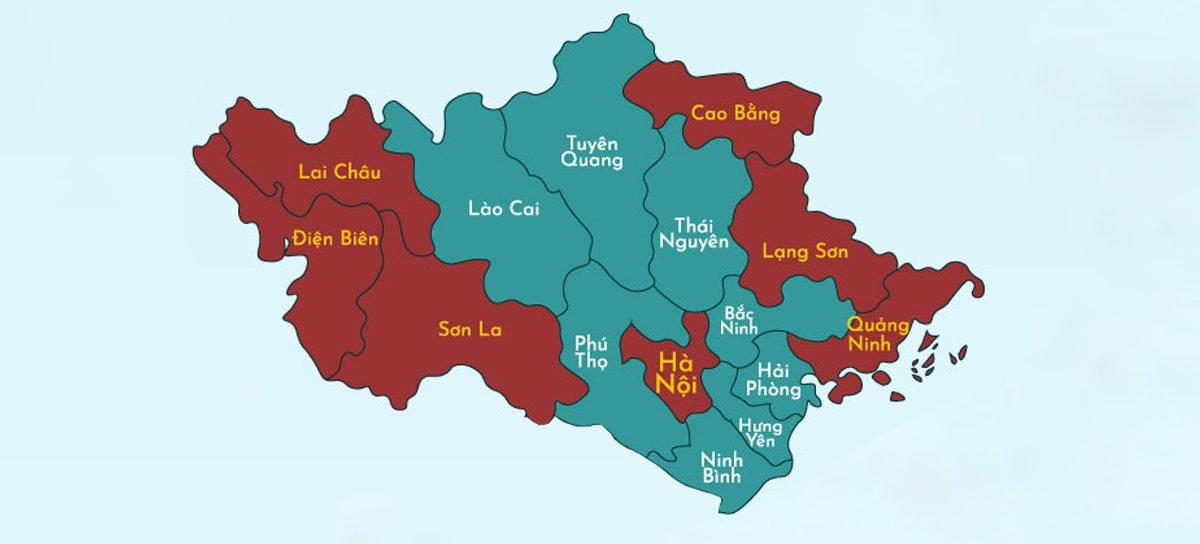
The Northern mountainous regions are the ancient heart of Vietnamese tea. Stretching across six provinces — Hà Giang, Yên Bái, Sơn La, Lai Châu, Lào Cai, and Điện Biên — this is where the oldest wild shan tuyet trees grow, where ethnic minority communities have harvested tea for generations, and where the terrain is remote enough that traditional practices have largely survived intact.
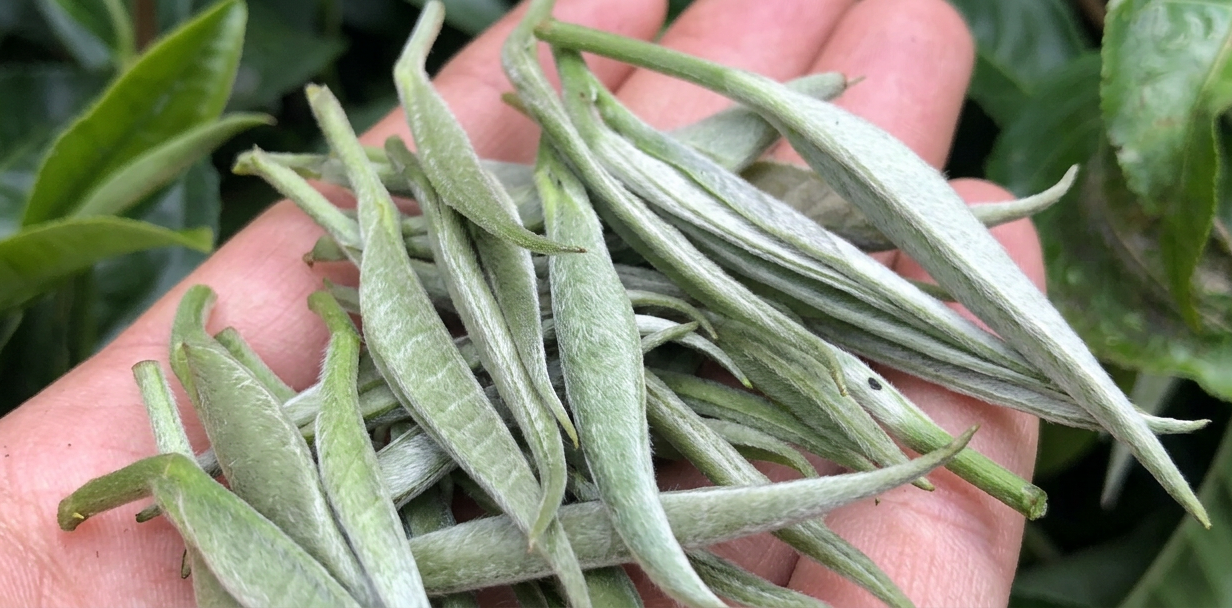
Chè shan tuyết — snow mountain tea — takes its name from the fine white hairs on the young buds. These are no ordinary tea bushes. They are large-leafed, genetically distinct from the farmed cultivars that dominate global production, and capable of living for hundreds of years. They grow at elevations above 700 metres, in mixed forest alongside other vegetation, their root systems reaching deep into undisturbed mountain soil. They were never planted in rows. They spread with the nomadic ethnic minority communities — H’Mông, Dao, Tày, Thái — who moved through these mountains over generations. The trees exist because those communities existed [1].
Each province has its own character.
Note: Following Vietnam’s 2025 administrative reforms, which consolidated the country’s 63 provinces down to 34 mega-provinces and eliminated the district level of bureaucracy, the map of the Northern region has evolved. This article references the old map. For a picture of the new map, please go to the Reference section [15].
Hà Giang — Vietnam’s Largest Shan Tea Region
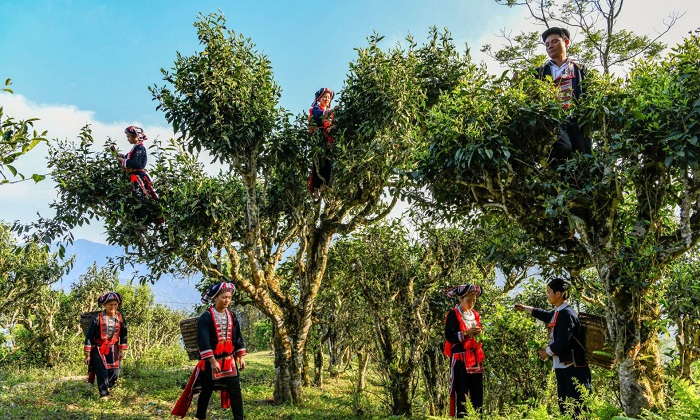
Hà Giang sits at Vietnam’s northernmost frontier, sharing a border with China’s Yunnan and Guangxi provinces. It is the largest shan tea-growing province in the country, with approximately 18,726 hectares under shan cultivation — representing 90.7% of the province’s total tea area [2]. Ancient tree forests are concentrated along the Tây Côn Lĩnh mountain range, across districts including Hoàng Su Phì, Xín Mần, Vị Xuyên, and Bắc Quang, at elevations of 700 to 1,700 metres. Some of the trees here are estimated to be more than 500 years old, with trunks reaching 1.2 metres in diameter [2].
Season: A subtropical highland climate, with cool misty winters and warm wet summers. Annual rainfall runs to 2,000–2,500mm, and persistent cloud cover moderates temperatures throughout the growing season. Farmers harvest four flushes per year: the spring flush (early April to mid-May) is the most prized for flavour and aroma; subsequent harvests run through June–July, August, and October–November [2]. The long winter dormancy concentrates energy in the spring buds, producing a tea that is notably clean, floral, and long-lasting across multiple infusions.
Soil: Ferralitic mountain soils: acidic, well-draining, and free from industrial agricultural inputs. The trees grow in entirely natural conditions, with no fertilisers, pesticides, or growth agents applied — a function of both tradition and terrain. Over 1,400 hectares of Hà Giang’s ancient tree gardens have received organic certification [2]. The Tây Côn Lĩnh range, where the densest wild tree populations grow, offers soils that have accumulated organic matter over centuries of undisturbed forest growth.
Soul: The harvest is carried out by H’Mông and Dao farming communities who have worked these trees across generations, picking and processing entirely by hand. Processing knowledge — when to pick, how to roast, how to finish — has been passed down orally from family to family. In 2018, Hà Giang received geographical indication (GI) status for its Shan Tuyet tea, formally recognising the distinctiveness of this origin [3]. Over time, local producers have refined their processing from purely traditional methods toward more sophisticated techniques that bring out higher quality and more consistent results, while preserving the essential wild character of the tea. The flavour profile is described as clean and deep, with a high, delicate floral aroma, a cool lingering finish, and strong endurance across multiple brewings [2].
Yên Bái – Suối Giàng
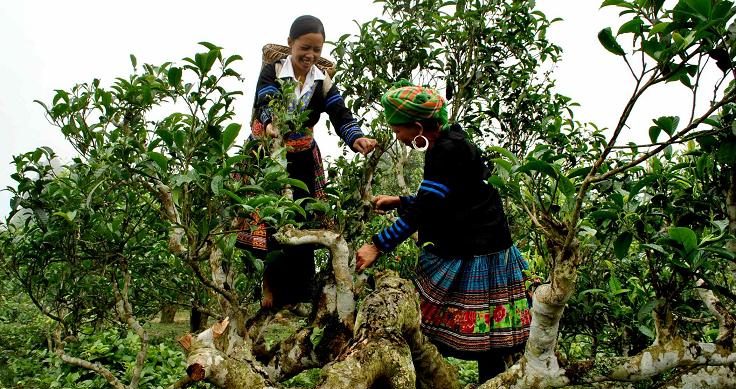
Yên Bái’s most celebrated tea area is Suối Giàng commune in Văn Chấn District — accessible from Hanoi via a 150km drive north, then a further 70km to Văn Chấn District, and a final 12km of steep mountain road. Suối Giàng is home to over 400 ancient wild shan tuyet trees formally recognised as “Heritage Trees of Vietnam” by the Vietnam Nature and Environment Protection Association [4]. The total tea area covers approximately 400 hectares, of which around 300 hectares consist of naturally occurring trees across villages including Giàng A, Giàng B, Pang Cáng, and Suối Lóp. The trees are enormous — some require several people to encircle their trunks, with canopies spreading up to 20 square metres [4].
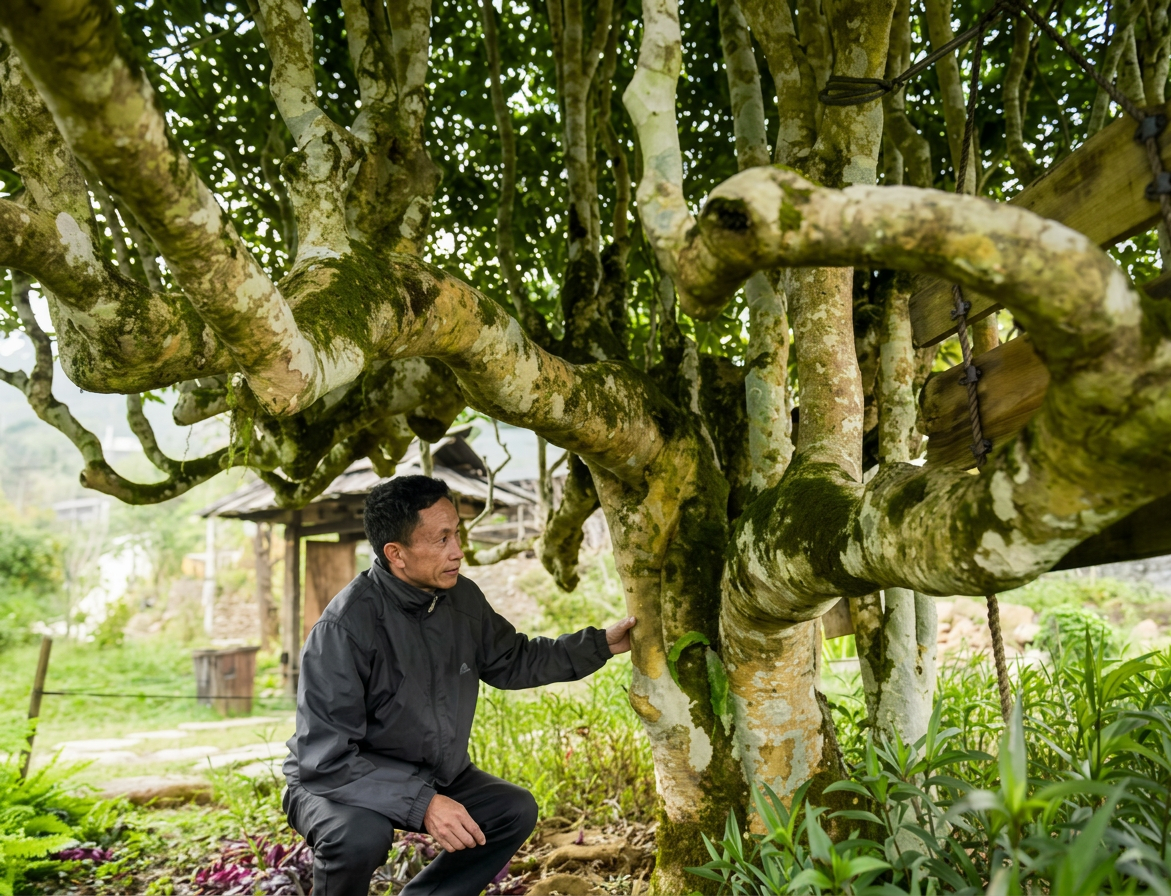
Season: Cool and persistently misty, with winters cold enough to bring occasional near-frost conditions at the highest elevations. Four harvests per year: the spring flush comes at the end of March, producing buds with over 50% white-haired coverage and accounting for 35–40% of the year’s total yield. Subsequent harvests follow in May, August, and October [4]. At harvest season, the aroma of fresh leaves being pan-fired over wood stoves drifts through every village in the area — a sensory marker of the season that has defined life in Suối Giàng for as long as anyone can remember.
Soil: Deep mountain soils with centuries of accumulated organic matter, formed in undisturbed mixed forest. The trees grow entirely without human intervention — no irrigation, no fertiliser, no pesticide — which gives the tea its distinctive clean, pure character. The infusion colour is described as clear, with a golden amber reminiscent of wild forest honey; the flavour is full and lingering, with a sweet finish that holds through many infusions [4].
Soul: Suối Giàng’s population is 98% H’Mông [4]. Tea cultivation is the community’s primary livelihood, handed down through families who harvest and process entirely by hand using traditional methods. Processing has become more organised over time: a speciality tea factory was established in 1980, the Suối Giàng Cooperative was founded in 2007, and since 2018, multiple processors and exporters have been bringing this tea to international markets [4].
Sơn La — Tà Xùa and Mộc Châu
Sơn La Province contains two tea-growing areas with very different identities: Tà Xùa, a wild-origin highland area of increasing renown, and Mộc Châu, one of the Northwest’s most productive and organised tea districts.
Tà Xùa
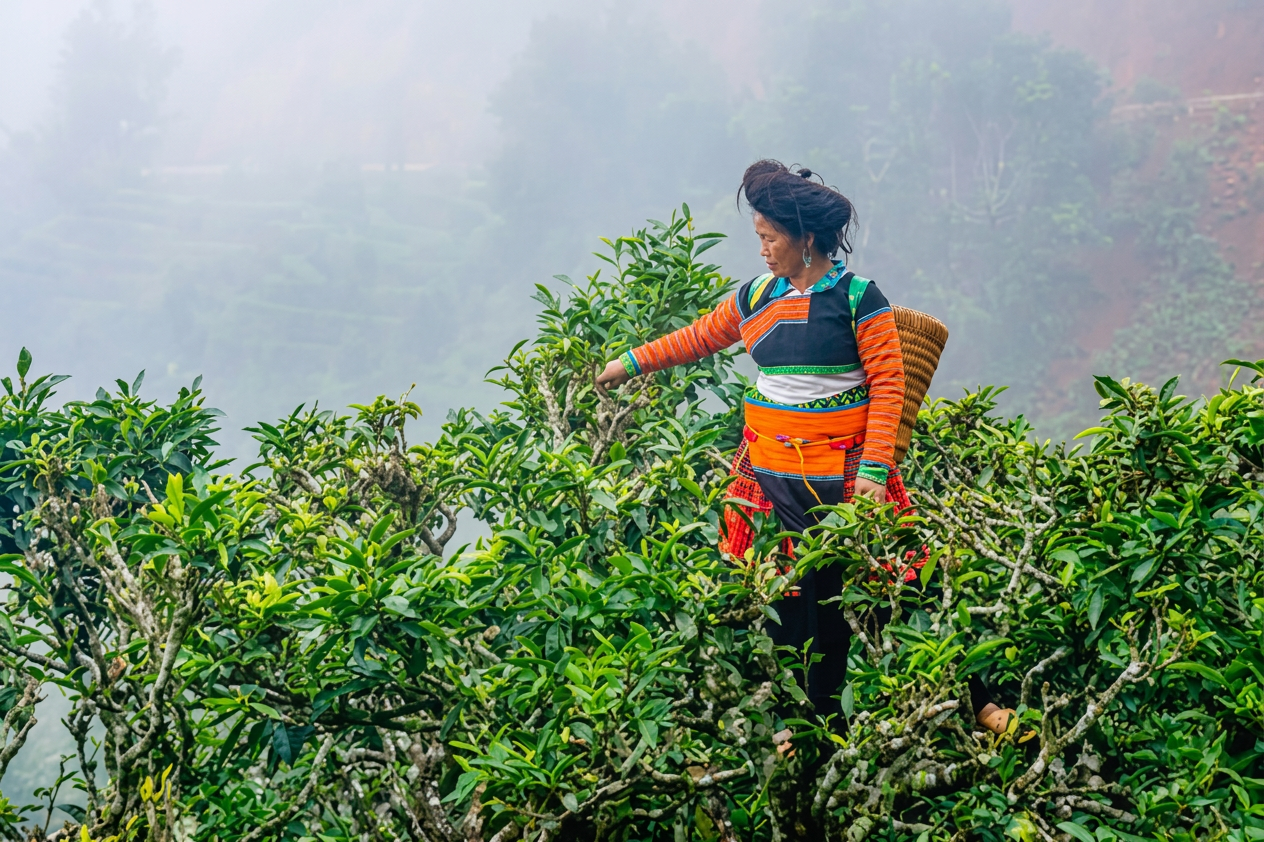
Tà Xùa is a highland area in Bắc Yên District, at elevations between 1,200 and 1,800 metres. Tà Xùa is known in Vietnam as a “sea of clouds” destination — a landscape where the valley floors disappear beneath fog and the tea trees emerge above them. Within Tà Xùa, the sub-area of Bản Bẹ is particularly sought after by specialty buyers for the age of its trees and the quality of its leaf [5].
Season: Cold winters with occasional frost at the highest points, persistent cloud cover through much of the year, and a highly prized spring flush from late February through April. Summer rains bring a second harvest, fuller-bodied than the spring leaves. The altitude and cold-season dormancy are central to the tea’s character: slow growth, concentrated flavour, complex chemistry.
Soil: Research published in 2022 identified the chemical profile of Tà Xùa shan tuyet as measurably distinct from other Camellia sinensis cultivars, with specific amino acids present in concentrations sufficient to serve as variety biomarkers [6]. This reflects both the genetic character of the old trees and the soil environment: deep mixed-forest soils with centuries of accumulated organic matter, never farmed, never treated with external inputs. The combination of elevation, aspect, and soil composition in Bản Bẹ specifically produces a tea that stands apart even within Tà Xùa.
Soul: H’Mông farming families harvest Tà Xùa’s trees by hand, working plots that have been in single families for generations. Production is small by necessity — ancient trees yield less than cultivated bushes, and the terrain makes mechanisation impossible. Vietnam’s domestic specialty tea community has paid close attention to Tà Xùa for the past decade, and independent processors are increasingly working directly with local families, translating this wild material into teas accessible to a broader audience [1].
Mộc Châu

Mộc Châu is a highland district sitting at around 1,000 metres — more accessible, more organised, and more commercially developed than Tà Xùa. Rolling plantation hills, dairy farms, and a landscape that reads as deliberately agricultural. Mộc Châu is one of the Northwest’s most established tea districts and is particularly known for oolong production.
Season: Temperate and relatively stable, with cool winters and warm humid summers. The seasonal variation suits oolong production well — the style demands precise processing windows that a more extreme climate would complicate. Mộc Châu’s conditions more closely mirror the high mountain oolong regions of Taiwan than any other Vietnamese province, which is no coincidence: the oolong cultivars here were largely sourced from Taiwan specifically because the climate matched [7].
Soil: Red-brown ferralsols — acidic, deep, free-draining, with good moisture retention. Mộc Châu holds its own GI designation for Shan Tuyet tea, though this refers to a cultivar grown on managed farms rather than wild-harvested ancient trees. The distinction matters: different product, different process, different price point, and a different story [3].
Soul: Mộc Châu’s tea industry is a mix of smallholder farmers and cooperative structures, with processing facilities oriented toward export-standard oolong. The oolong tradition here reflects a broader Vietnamese–Taiwanese exchange of knowledge and cultivar material that began in the latter half of the twentieth century [7]. This is working tea country: organised, connected to supply chains, and capable of producing teas of genuine quality within a more formal industry structure.
Lào Cai — Bản Liền
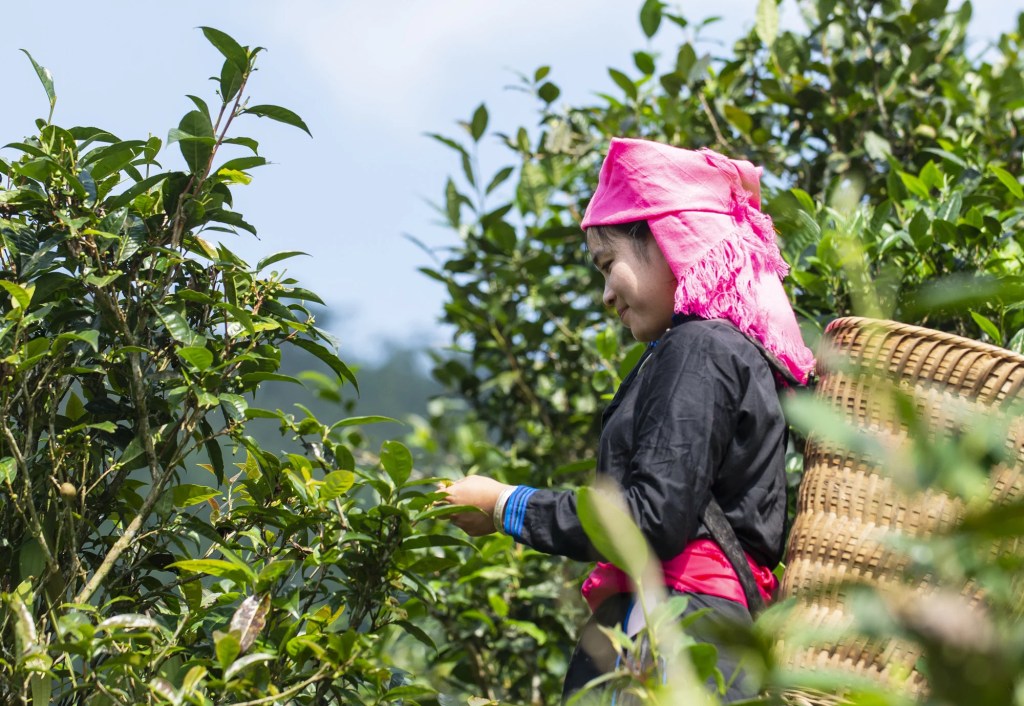
For most international visitors, Lào Cai means Sapa and Fansipan — Vietnam’s highest peak and its surrounding trekking country. But Lào Cai is also home to one of the most export-ready wild shan tea communities in the country: Bản Liền commune in Bắc Hà District, where over 400 hectares of ancient wild tea trees have been certified organic and are supplying demanding international markets [8].
Season: Bản Liền sits at around 1,500 metres above sea level. The climate is cool year-round, with dense mist that can reduce visibility to a few metres for days at a time. These conditions are ideal for shan tuyet — the plants grow naturally, without any cultivation inputs, and the slow cool growth concentrates the compounds that give the tea its character [8]. Harvest runs through the traditional four-flush calendar, with the spring flush prioritised for quality.
Soil: High-altitude mountain soils, mist-saturated and organically rich, entirely free of external inputs. The naturally growing trees — never farmed, never sprayed — draw on deep, complex soil profiles built over centuries of forest growth. The result is a tea with a bright, clear infusion, a flavour described as bold and wild like the Northwestern forests, with a deep sweet finish that holds across multiple brewings [8].
Soul: The Bản Liền Cooperative was established in 2004, bringing together over 400 Tày farming households. It is now one of Vietnam’s most credentialed wild tea producers, holding both IFOAM organic certification and Fairtrade certification via the ATC body — a foundation for consistent supply to EU, US, Canadian, and Japanese markets. The cooperative processes 600–800 tonnes of fresh leaf annually into 130+ tonnes of finished tea, across five to six product lines, and consistently operates with demand outstripping supply. Premium grades reach USD 100 per kilogram on international markets [8]. The Bản Liền model represents what structured cooperative organisation can achieve with wild-origin material: it has preserved the traditional harvest while building the traceability and certification infrastructure that serious international buyers require.
Điện Biên — Tủa Chùa
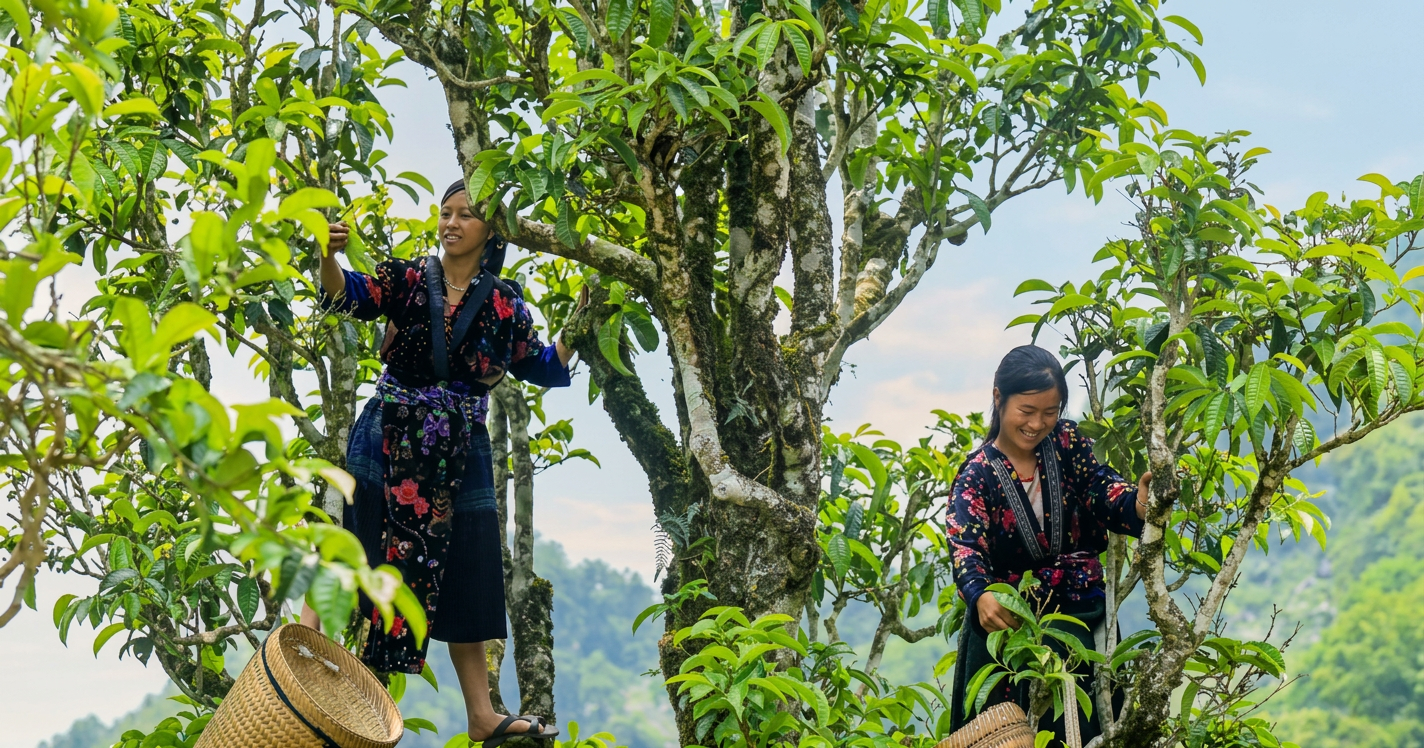
Điện Biên is known internationally for one pivotal historical event. Its tea is far less famous — which understates what the province produces. The main growing area is Tủa Chùa District, a high rocky plateau in the province’s north.
Season: Over half of Điện Biên’s natural area sits above 1,000 metres, with 70% characterised by steep slopes cut by rivers and streams [9]. Tủa Chùa District specifically sits at 1,400 metres. Tea-growing communes — Sín Chải, Sính Phình, Tả Sìn Thàng, and Tả Phìn — experience average temperatures of 21–23°C, annual rainfall of 1,620–2,080mm, and relative humidity of 83–85% [9]. The harvest runs from the third month of the lunar calendar (approximately March) through to the tenth month (October), with buds collected in the early morning while still carrying dew and their characteristic thin layer of white frost-like hairs.
Soil: Tủa Chùa’s approximately 595 hectares of tea include around 30 hectares of ancient trees — roughly 8,000 individual specimens, with research indicating that a significant proportion are over 300 years old, concentrated particularly in Sín Chải commune, which holds approximately 4,000 trees [9]. These trees grow on a rocky limestone and mountain soil plateau, self-adapted over centuries to some of the most demanding growing conditions in the Northwest. The harsh terrain and climate have produced a tea with a correspondingly powerful character: bright clear colour, strong initial astringency, followed by a warm, deep sweet finish that persists through many infusions [9].
Soul: The H’Mông communities of Sín Chải and surrounding villages are people who, as local producers describe it, were born already knowing tea — they grew up alongside these trees, tended them, and passed on harvesting and processing techniques entirely by hand through each generation [9]. Annual production reaches around 80 tonnes of fresh leaf, yielding approximately 15 tonnes of finished dry tea. The region remains relatively underdeveloped as a specialty export origin compared to Bản Liền or Hà Giang, but interest among domestic specialty buyers is growing as the quality of Tủa Chùa’s ancient tree material becomes better understood.
Lai Châu
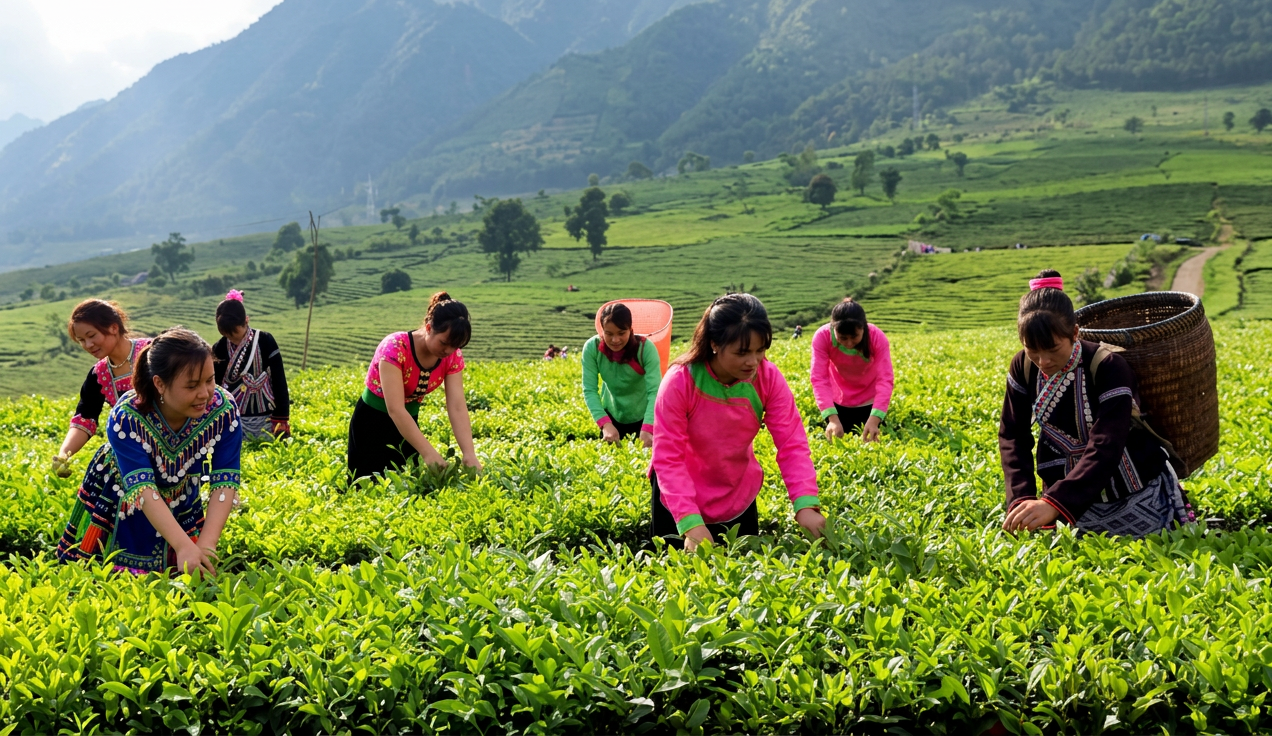
Lai Châu borders both China and Laos, and contains some of the highest-elevation tea-growing areas in Vietnam. It remains the least documented of the Northwestern provinces in both Vietnamese and English-language specialty tea literature — a gap that reflects the province’s remoteness rather than any absence of material worth documenting.
Season: The highest elevations push above 2,500 metres. Cold winters, significant day-to-night temperature variation, and growing seasons that are shorter but more concentrated than in lower provinces. The environment is demanding, and the teas reflect it.
Soil: High-altitude soils with high organic content, formed in mixed broadleaf and conifer forest. The remoteness of Lai Châu’s tea-growing areas has meant very little agricultural intervention — what grows here has largely grown undisturbed.
Soul: Lai Châu’s tea culture is carried primarily by Mảng, La Hủ, and other highland ethnic minority groups whose presence in this borderland is ancient [7]. Knowledge of the trees and how to work with them remains genuinely oral and familial. The region is only beginning to attract specialty buyer interest, and the infrastructure to supply consistently is still being built. Lai Châu represents the frontier of Vietnamese specialty tea — an origin whose full story is yet to be told.
Part Two: The Midlands tea belt
Phú Thọ – Vietnam’s oldest tea hills

Phú Thọ is where the modern tea industry began. In 1890, the Chaffanjon Trading Company established the first formal tea plantation in Vietnam — 60 hectares in Tinh Cuong, Phú Thọ, a site that still bears the name Chu Che today [12]. In 1918, the Phú Thọ Agricultural Research Station was established in Phú Hộ, specialising in tea research and development — one of three such stations set up during the French colonial period to develop the industry [12]. The province’s relationship with tea, however, runs deeper than colonialism: fossilised tea leaves and plant remains have been discovered in Phú Thọ, the ancestral land of the Hùng Kings — the legendary founders of the first Vietnamese nation — placing tea at the very origin of Vietnamese civilisation [13].
Today, Phú Thọ is Vietnam’s largest black tea export hub, supplying markets including Pakistan, the Middle East, Russia, and the United States [14]. Its most scenic growing area is Long Cốc valley in Tân Sơn District — a landscape of rolling, mist-covered tea hills that has become one of the most photographed in northern Vietnam.
Season: Phú Thọ has a tropical monsoon climate with long harvest seasons that enable year-round tea production [14]. The province sits at a lower and warmer elevation than the Northwestern highlands, with higher temperatures and more rainfall distributed across a longer growing calendar. This extended season underpins the province’s high-volume output and its specialisation in black tea styles that require full, consistent leaf development.
Soil: Phú Thọ’s hilly terrain is underlain by red-yellow ferralitic soil, considered ideal for tea cultivation [14]. These are the same broad soil types found across Vietnam’s midlands tea belt — acidic, well-draining, and mineral-rich — but at the lower altitudes of Phú Thọ they produce a leaf profile suited to full oxidation and the robust character of black tea rather than the delicate sweetness of high-mountain green tea.
Soul: Phú Thọ’s tea identity is inseparable from its industrial history. The province is the origin of Vietnam’s export tea industry, and the infrastructure built around it — factories, research stations, cooperatives — has shaped the national tea economy for over a century. The primary products are CTC Assam black tea and orthodox black tea (OTD), the main ingredients for milk tea, iced black tea, and bottled tea drinks, with a liquor characterised by a beautiful amber-red colour, strong taste, and lasting sweetness [14]. Alongside this industrial output, the Long Cốc valley has developed a quieter identity as a destination for tea tourism, drawing visitors to its rolling hills and Mường and Dao ethnic minority villages where older growing traditions sit alongside the modern plantations.
Thái Nguyên – The Household Favourite
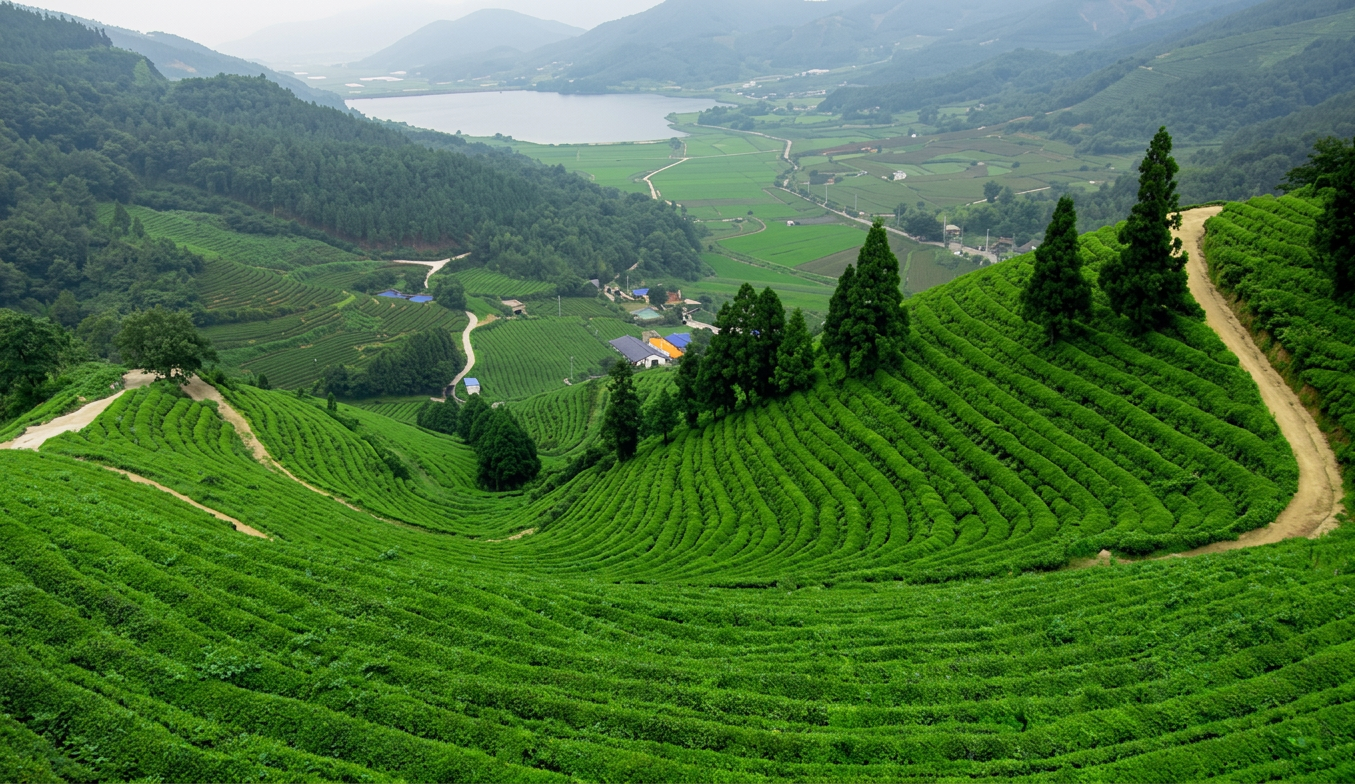
Thái Nguyên is Vietnam’s most famous tea region by name recognition. Ask almost any Vietnamese person which province produces the best tea, and most will say Thái Nguyên — specifically chè Tân Cương, the green tea from Tân Cương commune that has been synonymous with quality Vietnamese everyday tea for at least a century. Within this legendary terroir, chè móc câu (hook tea)—named for its tightly twisted leaves that resemble tiny fishhooks—reigns as the region’s most iconic and celebrated style.
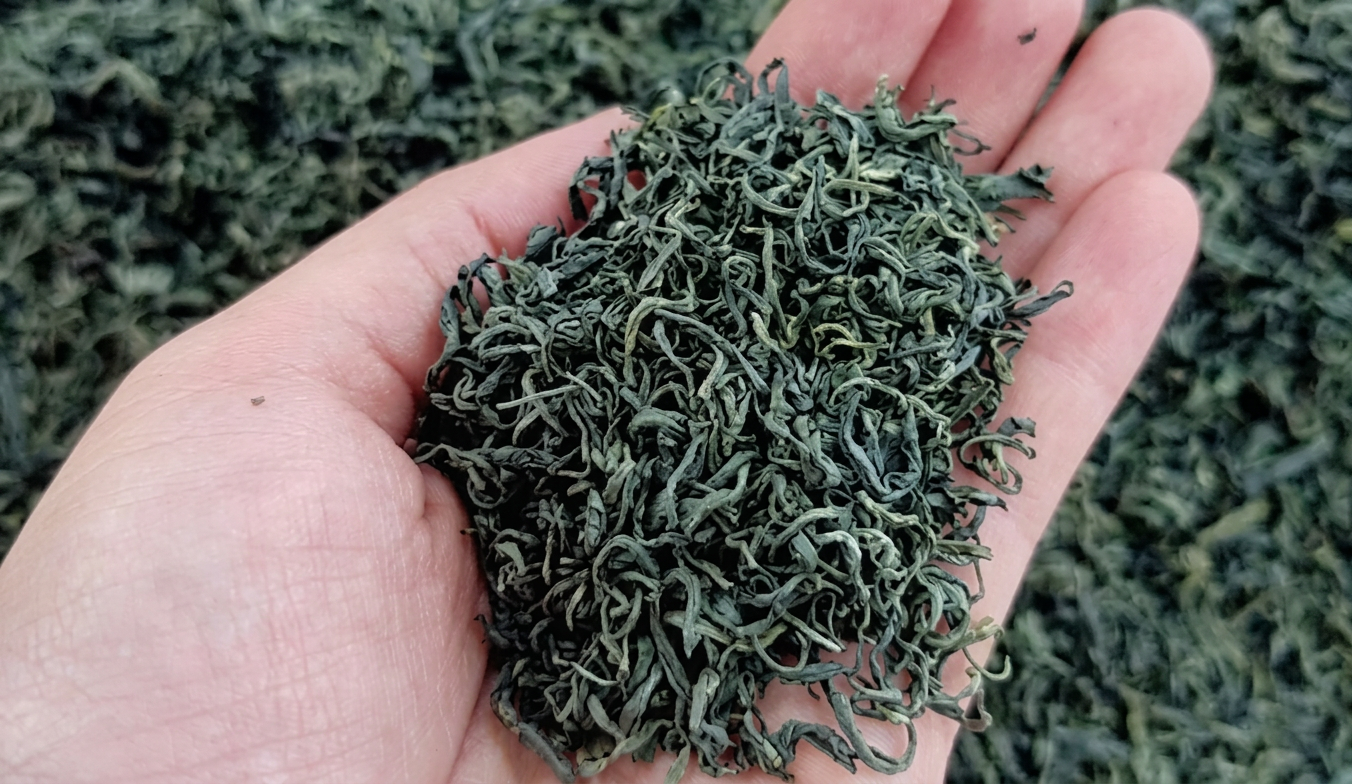
Where the Northwestern provinces are defined by antiquity and wild-origin trees, Thái Nguyên is defined by craft: the accumulated skill of growing, picking, and processing green tea to a standard that has made it the benchmark of Vietnamese tea culture. This is not the highland wilderness. It is a productive lowland-to-midland tea belt, roughly 80km north of Hanoi, where tea is not an archaeological discovery but a living daily practice.
Season: Thái Nguyên has a humid subtropical climate, warmer and at lower elevation than the Northwestern highlands. Annual rainfall averages around 2,000mm across a long growing season running from early spring through late autumn. Multiple harvests per year are standard, with the spring flush (chè xuân) considered the highest quality and commanding correspondingly higher prices [10].
Soil: Primarily acidic yellow-red ferralsols, well-draining and well-suited to tea cultivation across the province. The particular soils of Tân Cương commune are frequently cited as a key factor in the distinctive sweet, rounded character of the tea produced there — a specific combination of mineral composition, drainage, and microclimate that producers in adjacent communes find difficult to replicate exactly, even using the same cultivars and processing methods [1].
Soul Thái Nguyên’s tea culture is a household culture. This is the tea that Vietnamese families have drunk at home for generations — green tea brewed strong, poured into small cups, consumed throughout the day. Tân Cương commune has operated as a specialist producer community for over a century, with families developing deep knowledge of cultivation and processing: when to pick, how long to wither, the precise heat and duration of the roasting step. That knowledge is embedded in the community, passed between families and neighbours, not codified in manuals. In recent years, Thái Nguyên has also become a significant domestic tea tourism destination, with festivals, farm visits, and direct-to-consumer sales that have given producers a channel to market their work without intermediaries [11].
Part Three: The Central Highlands
The Central Highlands are geographically and climatically unlike anything in northern Vietnam. This is high plateau country, underlain by ancient volcanic basalt, with a cool and stable climate set apart from both the tropical lowlands and the extreme highland terrain of the north. The two principal tea-growing areas within the highlands are Bảo Lộc in Lâm Đồng Province, and Măng Đen in Kon Tum Province — different in character but connected by the volcanic soils and elevated climate that define the region.
Bảo Lộc, Lâm Đồng
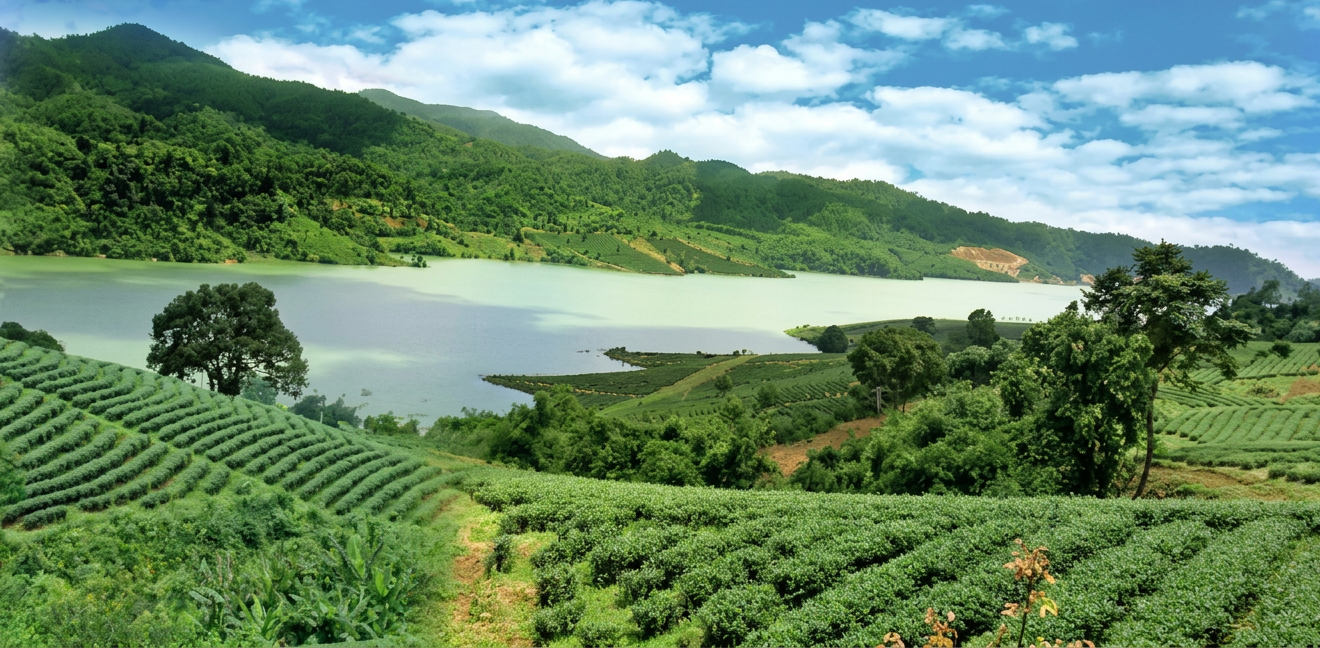
Bảo Lộc is the commercial centre of Vietnamese oolong production and one of the most significant tea towns in Southeast Asia. Sitting at around 900 metres above sea level in southern Lâm Đồng, it has attracted substantial investment, sophisticated processing infrastructure, and cultivar imports from Taiwan that have made it Vietnam’s most internationally connected tea-producing area.
Season: A bimodal rainfall pattern — two wet seasons separated by relatively dry periods — moderated by altitude into a cool subtropical climate. Average temperatures hover around 18–22°C year-round, with minimal seasonal extremity. This consistency is what makes Bảo Lộc particularly well-suited to oolong: the style demands careful, timed oxidation management, which is considerably easier to achieve in a stable climate than in the volatile conditions of the northern highlands [10]. Year-round production is possible, with subtle quality differences across seasons that experienced processors track closely.
Soil: Deep basalt-derived soils: mineral-rich, free-draining, with excellent moisture retention at depth. The basaltic terroir of Lâm Đồng underpins the province’s productivity — it accounts for over 20% of Vietnam’s national tea output — and contributes the mineral backbone that characterises the region’s best oolongs [11].
Soul: Bảo Lộc’s industry is the most formally structured in Vietnam: a mix of large-scale processing companies, Taiwanese-invested operations, and smaller independent producers who have spent years refining their craft to produce oolongs that compete with high mountain teas from Taiwan or Fujian. The region is home to a thriving café and tea-shop culture, driven by proximity to Dalat and the highland tourism circuit. A growing number of producers are investing in organic certification and premium positioning, moving away from the commodity volume model that has historically defined Vietnamese tea exports [11].
Măng Đen, Kon Tum
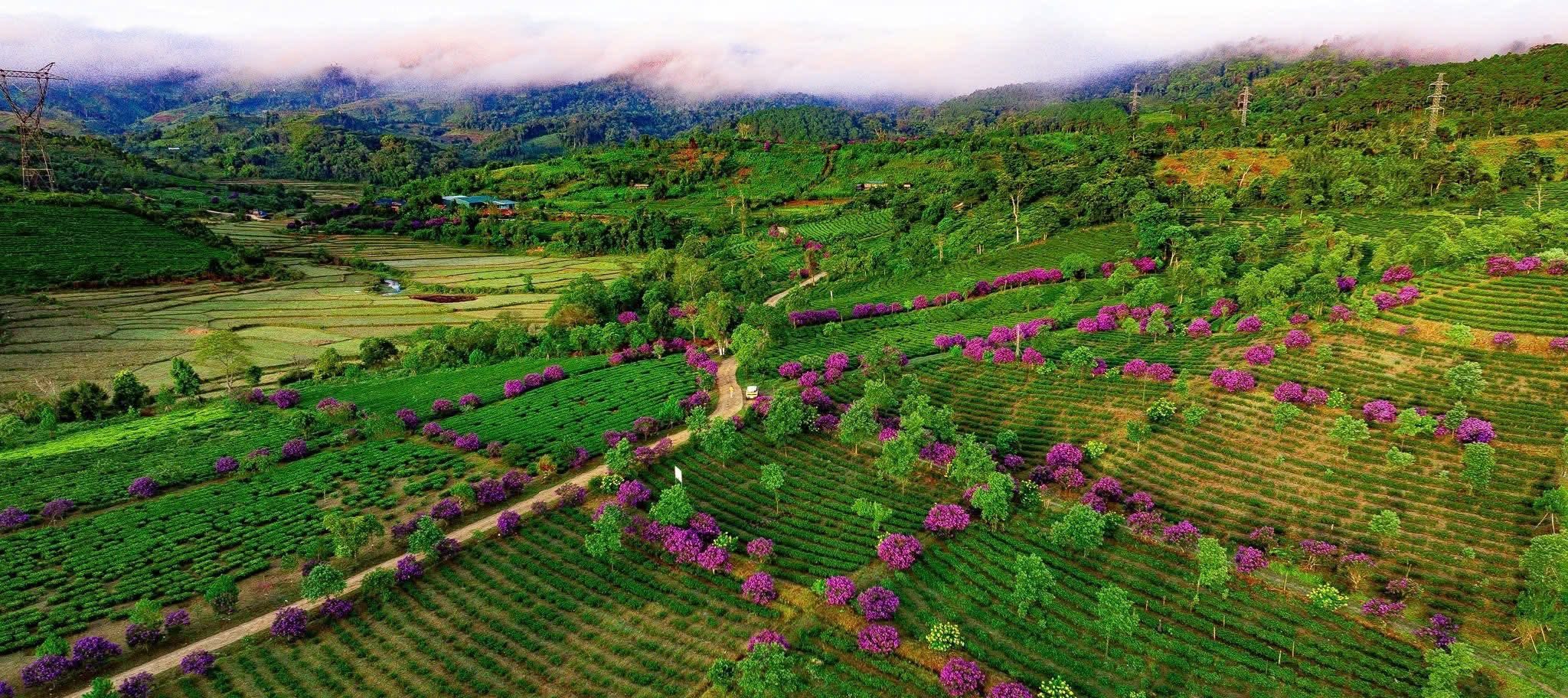
Măng Đen is younger as a recognised specialty tea origin and far less well known than Bảo Lộc — which may be precisely why it is worth knowing about now. Situated at around 1,200 metres in the central Kon Tum highlands, it offers some of the coolest and most elevated growing conditions in the Central Highlands, within a forested landscape that remains relatively undisturbed.
Season: Higher elevation than Bảo Lộc means lower average temperatures, more pronounced cool seasons, and a growing environment that produces leaves with slower development and a different flavour profile. The cool nights and misty mornings draw comparisons with the character of northern Vietnamese growing areas — Măng Đen sits, in some respects, between the plantation model of the Central Highlands and the wilder conditions of the Northwest [10].
Soil: Basalt-derived soils throughout, as across the Central Highlands, but with higher organic matter content and greater humidity retention than in the Bảo Lộc basin. The remaining forest cover of the Măng Đen area contributes to a richer soil ecosystem and growing conditions closer to semi-wild than most of Lâm Đồng’s more intensively cultivated zones.
Soul: Măng Đen is home to Bahnar and Xơ Đăng indigenous communities with a long relationship with the highland forest. The area is beginning to attract specialty tea interest — particularly from producers and buyers looking for genuine terroir differentiation in a region where Bảo Lộc has become almost synonymous with Vietnamese oolong. It is still early days in terms of market development, but Măng Đen represents the kind of emerging origin that the specialty market rewards once consistent supply infrastructure exists.
The Wider Picture
Vietnam’s tea regions do not tell a single story. The Northwestern highlands are about antiquity — trees that predate the modern Vietnamese state, harvested by communities whose relationship with the land has never required documentation to endure. Thái Nguyên is about everyday excellence — a craft green tea tradition refined across generations of farming families in a province where tea is not a discovery but a way of life. The Central Highlands represent a more recent chapter, oriented toward international markets and oolong production, with genuine quality at its best and emerging origins like Mang Den suggesting the story is still being written.
What connects all of them is a depth of knowledge and cultural practice that has rarely been systematically documented or made accessible to people outside Vietnam. That is beginning to change — slowly, through the work of specialist producers, cooperatives, and those who believe that Vietnamese tea deserves the same serious attention that the world already gives to Yunnan, Darjeeling, or Uji.
References
[1] Kill Green (2020). Vietnamese Tea: Origin, Geography, Cultivars, Current Affairs. killgreen.io. Available at: https://killgreen.io/vietnamese-tea-origin-geography-cultivars-current-affairs
[2] Snow Shan Tea (2019). Hà Giang — Vùng Chè Shan Lớn Nhất Trên Cả Nước. snowshantea.com. Available at: https://snowshantea.com/blogs/vung-tra/ha-giang
[3] Vietnam.vn (2018). Geographical Indication Protection for Hà Giang and Mộc Châu Shan Tuyet Tea. vietnam.vn.
[4] Snow Shan Tea (2019). Chuyện Trà Shan “5 Cực” ở Suối Giàng, Yên Bái. snowshantea.com. Available at: https://snowshantea.com/blogs/vung-tra/chuyen-tra-shan-5-cuc-o-suoi-giang-yen-bai
[5] Viet Sun Tea (2022). Tà Xùa Sub-Region Profiles. vietsuntea.com.
[6] Nguyen, T.H. et al. (2022). ‘Chemical characterisation of Shan Tuyet (Camellia sinensis) tea from Tà Xùa, Sơn La, Vietnam’, Natural Product Communications, 17(4).
[7] Path of Cha (2021). Vietnam Tea Regions and What Makes Vietnamese Tea Unique. pathofcha.com.
[8] Snow Shan Tea (2019). Chè Shan Tuyết Bản Liền, Lào Cai — Từ Chứng Nhận Hữu Cơ Vươn Ra Thế Giới. snowshantea.com. Available at: https://snowshantea.com/blogs/vung-tra/tra-shan-tuyet-ban-lien-lao-cai-tu-chung-nhan-huu-co-vuon-ra-the-gioi
[9] Snow Shan Tea (2019). Shan Tuyết Tủa Chùa, Điện Biên — Sức Sống Mãnh Liệt Trên Cao Nguyên Đá. snowshantea.com. Available at: https://snowshantea.com/blogs/vung-tra/shan-tuyet-tua-chua-dien-bien-suc-song-manh-liet-tren-cao-nguyen-da
[10] Tea J Tea (2021). Vietnamese Tea Regions. teajtea.com.
[11] Vietnam Tea Association — Vitas (2022). Annual Production and Regional Overview. vitas.com.vn.
[12] Vietnam-tea.com (2021). Vietnamese Tea History: 5 Unforgettable Milestones. Available at: https://vietnam-tea.com/tea-news/vietnamese-tea-history.html
[13] Nhà Máy Chè 1927 / Đôi Dép (2024). A Long History of Vietnamese Tea. Available at: https://doidep.com/en/nha-may-che-1927/
[14] Cẩm Khê Tea (2025). Discover the Famous Tea Regions in Vietnam. Available at: https://camkhetea.com/en/famous-tea-regions-in-vietnam/
[15] New map of the Northern region of Vietnam.

 Duyên Tea